Industrial Fume Extraction and Air Filtration
Our Solutions for Industrial Fume Extraction and Air Filtration
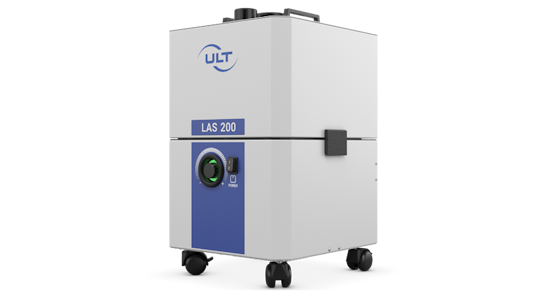
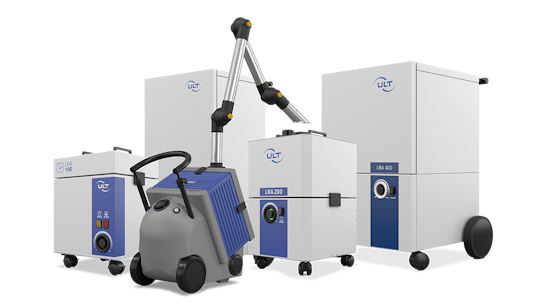
From "classic" dust and fume to "new emissions", from stand-alone to system solutions: ULT offers fume extraction and air filtration technologies for all production processes – particularly for the sophisticated and challenging ones.
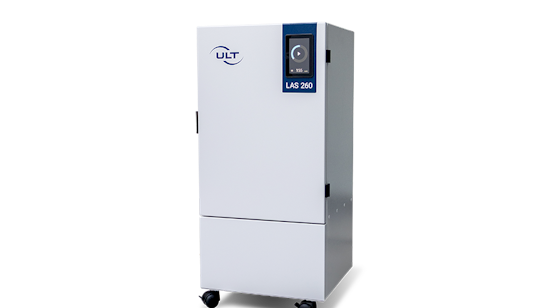
Our air filtration solutions are graded according to performance. The compact and modular ventilation systems for workplace extraction form the basis for the appropriate fume extraction technology or for process air drying, depending on the application. If necessary, this is completed by engineering adaptations to your individual on-site conditions.
Please select the emissions to be eliminated or the air filtration process.












Your contact to our partners
We will gladly put you in touch with our local partners. You are welcome to contact us - your inquiry will immediately be forwarded.
ULT's accessories and services for industrial fume extraction

FAQ
Industrial air filtration is the process of removing dust, fumes, smoke, oil mist, aerosols, gases and other airborne contaminants from industrial environments. Industrial air filtration systems help protect employees, machinery and production processes while supporting cleaner and safer workplace air.
Effective industrial air filtration helps reduce exposure to hazardous airborne substances, improve indoor air quality and protect sensitive equipment. It can also support compliance with workplace safety requirements, reduce contamination in production areas and improve the reliability of industrial processes.
Industrial air filtration systems capture contaminated air at or near the source of emission. The air is then conveyed through one or more filters that separate particles, aerosols or gaseous pollutants from the air stream. Depending on the application, systems may use mechanical filters, HEPA filters, activated carbon filters or other specialized filtration technologies.
Industrial air filtration systems can be designed to remove a wide range of contaminants, including dust, welding fumes, laser fumes, vapors, oil mist, fine particles, aerosols, odors and dangerous gases. The appropriate system depends on the contaminant’s characteristics, concentration, particle size and the specific production process.
Source capture means collecting contaminants directly at the point where they are generated. Examples include extraction arms, capture hoods, machine enclosures and integrated extraction systems. Source capture is often more effective and energy-efficient than relying solely on general room ventilation because it prevents contaminants from spreading throughout the workplace.
Selecting the right industrial air filtration system requires an assessment of the process, contaminant, required airflow, capture method, operating hours and available space. Important factors include filtration efficiency, pressure drop, filter service life, noise level, energy consumption and whether the filtered air can be returned to the workplace.
HEPA filters are used when very high filtration efficiency for fine airborne particles is required. They are commonly applied in areas such as pharmaceutical manufacturing, medical technology, laboratories, electronics production and additive manufacturing. The suitability of a HEPA filter depends on the contaminant, airflow and overall system design.
Yes, industrial air filtration systems can be designed to reduce certain gases, vapors and odors. In these applications, adsorption media such as activated carbon or other specialized filter materials are typically used. The correct filter depends on the chemical composition, concentration, humidity and required service life.
General ventilation exchanges or dilutes the air in an entire room. Industrial air filtration, especially when combined with source capture, removes contaminants directly from the production process. In many applications, the best solution combines source extraction, suitable filtration and adequately designed room ventilation.
Well-designed industrial air filtration can reduce airborne contaminants, support a healthier working environment and help protect production equipment. It may also reduce cleaning requirements, minimize contamination-related downtime and improve process stability. Regular maintenance and timely filter replacement are essential for maintaining system performance.